

Does Minoxidil Work? Timeline, Regrowth, Safety, and Results
Quick Answer: Yes. Clinical studies prove it works for most people. You will see results in 3 to 6 months. It works for both men and women. It is not permanent. You must keep using it to maintain results.
How Does Minoxidil Work?
Quick Answer: Does Minoxidil work by waking up sleeping hair follicles? Yes. It pushes follicles from rest phase to growth phase. It opens blood vessels. It extends the growth period. It blocks DHT effects on follicles.
You want to know how does Minoxidil work on your scalp. The science is clear. Minoxidil acts as a potassium channel opener. It stimulates dermal papilla cells directly (Choi et al., 2018). These cells control hair growth cycles.
Minoxidil shortens the resting phase. Research shows it cuts the telogen phase from 20 days down to just 1 to 2 days in treated areas (Mori and Uno, 1990). This forces follicles into the growth phase faster. Your hair enters anagen phase quicker.
The drug boosts blood flow. It increases vascular endothelial growth factor (VEGF) expression by six times in dose-dependent manner. More VEGF means more blood vessels around follicles. Better blood supply feeds hungry hair roots.
Minoxidil fights androgens too. It blocks 5α-reductase type II enzyme (Gupta et al., 2023). This enzyme converts testosterone to DHT. DHT shrinks follicles. By blocking this conversion, Minoxidil protects follicles from miniaturization.
The medication also stimulates prostaglandin E2 production. This hormone helps follicles stay in growth phase longer. Your hair grows thicker and longer before falling out.
| Mechanism | Action | Result |
| Shortens telogen phase | Pushes follicles to anagen | Faster new hair growth |
| Increases VEGF | Builds new blood vessels | Better nutrient delivery |
| Blocks 5α-reductase | Reduces DHT levels | Protected follicles |
| Extends anagen phase | Prolongs growth period | Longer, thicker hair |
You apply it topically. Your scalp absorbs about 1.4% of the dose. Systemic absorption is low. This keeps side effects minimal while delivering local benefits.
How Long for Minoxidil to Work?

Quick Answer: Expect 8 to 12 weeks for first visible changes. Full results show at 4 to 6 months. Some people need 12 months. Patience matters.
You ask how long does it take Minoxidil to work. The timeline varies by person. Clinical trials give us solid data. Most users see initial shedding first. This happens at weeks 2 to 8. Old hairs fall out. New growth follows.
At week 8, studies show measurable changes. Researchers photographed scalp changes at 8 weeks. They saw hair growth in both frontal and vertex regions (Suchonwanit et al., 2014). Early responders showed visible improvement by this point.
By month 3, you should see soft, downy hair. These vellus hairs signal the drug is working. They will thicken over time. Do not stop here. Keep applying daily.
Month 4 to 6 brings the real payoff. Terminal hairs replace vellus hairs. Your hair looks denser. Studies confirm maximum results typically appear at 6 months. One meta-analysis found significant hair count increases at this mark (Gupta et al., 2022).
Some people are slow responders. They need 12 months to see full benefits. Genetics play a role. Your degree of hair loss matters too. Earlier treatment yields faster results.
| Timeline | What Happens | What You See |
| Weeks 1–2 | Drug penetrates scalp | Nothing visible yet |
| Weeks 2–8 | Shedding phase begins | More hair loss (normal) |
| Week 8 | Early growth signals | Tiny new hairs appear |
| Month 3 | Vellus hair growth | Soft, light new hair |
| Month 4–6 | Terminal hair development | Thicker, darker hair |
| Month 6–12 | Full maturation | Maximum density achieved |
You must apply it twice daily. Missing doses delays results. Consistency beats intensity. Set phone reminders. Make it part of your morning and night routine.
Does Minoxidil Work for Women?

Quick Answer: Yes. FDA approved 2% solution in 1992 and 5% foam in 2014. Women respond well. They often see results faster than men.
You wonder is Minoxidil safe for women. The answer is yes, with precautions. The FDA approved topical Minoxidil specifically for female pattern hair loss. Millions of women use it safely.
Women typically use 2% solution or 5% foam once daily. Men use 5% solution twice daily. The lower frequency suits women's biology. Studies show 2% works well for female pattern thinning (Blume-Peytavi et al., 2011).
Is Minoxidil safe for women who are pregnant? No. The FDA classifies it as Category C. Animal studies showed fetal risks. Human data is limited but concerning. One case report linked topical use to fetal malformation (Smorlesi et al., 2003). Another reported caudal regression syndrome (Rojansky et al., 2002).
Breastfeeding women should avoid it too. The drug passes into breast milk. The infant could absorb it. This poses unknown risks.
Women with normal blood pressure tolerate it well. Side effects are usually mild. You might see facial hair growth if the solution drips down. Apply carefully. Wash hands after use. Do not let it touch your face.
Studies show women achieve 20 to 30% more hair density at 6 months. They report higher satisfaction scores than men. This suggests does Minoxidil work for women is strongly positive.
| Gender | Typical Dose | Response Time | Satisfaction Rate |
| Men | 5% twice daily | 4–6 months | 60–70% |
| Women | 2% or 5% once daily | 3–5 months | 70–80% |
Does Rogaine Actually Work?
Quick Answer: Rogaine is just brand-name Minoxidil. It works exactly the same as generic versions. The active ingredient determines results, not the brand name.
You see Rogaine ads everywhere. You ask does Rogaine actually work compared to other brands. Here is the truth. Rogaine contains Minoxidil. That is the only ingredient that matters. Generic Minoxidil works identically.
Rogaine offers 2% and 5% solutions. They also sell 5% foam. The foam came out in 2011. It spreads easier. It dries faster. It causes less irritation than solutions containing propylene glycol.
Clinical trials prove Rogaine works. In one 48-week study, 5% Rogaine increased hair count by 45% more than placebo (Olsen et al., 2007). The 2% solution showed 33% improvement. Both beat doing nothing.
Rogaine foam costs more than generics. You pay for marketing and packaging. The active ingredient is identical. Save money with pharmacy brands. Look for "Minoxidil" on the label. Check the percentage matches your needs.
The brand offers a satisfaction guarantee. This reduces financial risk. Try it for 6 months. Document with photos. If you see no change, you can request a refund. Most people see something by month 4.
| Product Type | Minoxidil % | Best For |
| Rogaine Solution (Men) | 5% | Established thinning |
| Rogaine Foam (Men) | 5% | Sensitive scalps |
| Rogaine Solution (Women) | 2% | Early stage loss |
| Generic Solution | 2% or 5% | Budget-conscious |
| Generic Foam | 5% | Easy application |
Can Minoxidil Regrow Hairline?
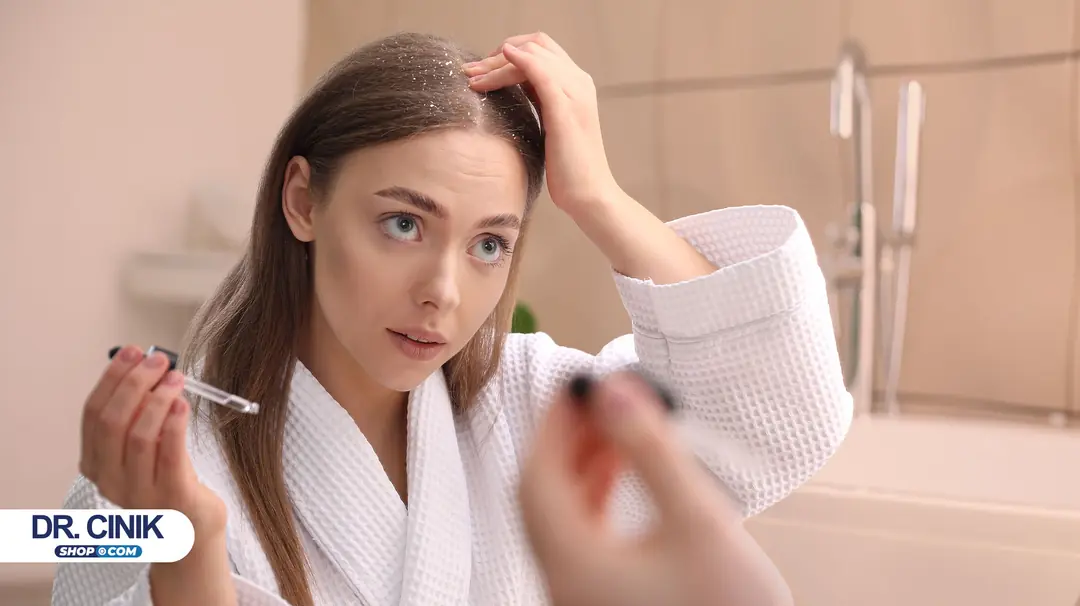
Quick Answer: Yes, but results vary. The frontal scalp responds differently than the crown. Early treatment works better. Complete bald spots rarely regrow.
You stare at your receding hairline. You ask can Minoxidil regrow hairline specifically. Science says yes, with caveats. The frontal scalp has different biology than the vertex. But Minoxidil works there too.
A 2014 study tested 5% foam on frontal and vertex areas. Researchers took scalp biopsies. They analyzed gene expression. Both regions showed positive responses (Suchonwanit et al., 2014). Hair keratin genes increased. Inflammatory genes decreased. The frontal scalp benefited just like the crown.
However, the hairline is harder to treat. Why? Follicles there have been miniaturized longer. They are closer to death. Once a follicle dies, nothing brings it back. You must catch thinning early.
Studies show best results on recent recession. If your hairline moved back in the last 2 to 3 years, you have good odds. If it receded 10 years ago, expectations should stay modest. You might see thickening of existing fine hairs. You probably will not see new hairs on completely bald skin.
Apply directly to the hairline. Use the dropper or foam nozzle. Part hair to reach the skin. Massage gently. Do not just spray on top of hair. The drug must touch the scalp.
| Area | Response Rate | Typical Result | Best Candidate |
| Vertex (Crown) | 70–80% | Significant regrowth | Early to moderate loss |
| Frontal (Hairline) | 50–60% | Moderate thickening | Recent recession |
| Temporal | 40–50% | Minimal change | Long-standing loss |
| Completely bald | <10% | None | No living follicles |
How to Apply Minoxidil

Quick Answer: Apply to dry scalp. Use 1 mL of solution or half-capful of foam. Spread on thinning areas. Massage gently. Wash hands after. Apply twice daily. Wait 4 hours before washing hair.
You need to know how to apply Minoxidil correctly. Technique affects results. Follow these steps exactly.
First, start with a dry scalp. Wet skin dilutes the drug. Hair should be dry too. This ensures absorption into the skin, not the hair shaft.
Measure your dose precisely. For solution, use the dropper. Draw 1 mL. This equals 20 drops. For foam, fill the cap halfway. This gives proper dosage. More is not better. It just wastes product and increases side effects.
Part your hair in rows. Expose the scalp. Apply directly to the skin. Do not spray on hair. The follicles live in the skin. Target the thinning zones. Include a small margin around them.
Massage with fingertips for 30 seconds. This spreads the drug. It stimulates blood flow. It ensures even coverage. Do not use a comb. Fingertips work best.
Wash your hands immediately. The drug can cause hair growth anywhere. You do not want hairy hands or face. Use soap and water. Dry thoroughly.
Let it dry for 4 hours. Do not wash your hair during this window. The scalp needs time to absorb. You can style hair after 30 minutes. Avoid hats or helmets for 4 hours. They rub off the product.
Apply twice daily. Morning and night work best. Space doses 12 hours apart. Consistency builds steady drug levels. Sporadic use fails.
| Step | Action | Time |
| 1 | Ensure dry scalp and hair | 2 minutes |
| 2 | Measure 1 mL solution or half-cap foam | 1 minute |
| 3 | Part hair and apply to scalp | 3 minutes |
| 4 | Massage gently | 30 seconds |
| 5 | Wash hands thoroughly | 1 minute |
| 6 | Let dry completely | 4 hours |
| Total time investment | ~10 minutes daily |
How Much Minoxidil Should You Use?
Quick Answer: Men need 1 mL of 5% solution twice daily. Women use 1 mL of 2% once daily or 5% foam once daily. Never exceed recommended dose. More drug does not mean more hair.
You ask how much Minoxidil to use for best results. Precision matters. The FDA set these doses based on clinical trials. They work. Higher doses increase side effects without improving growth.
For men using solution: Apply 1 mL of 5% Minoxidil. Use it twice daily. Total daily dose is 2 mL. This delivers 100 mg of active drug. Studies prove this amount stimulates growth (Olsen et al., 2007).
For men using foam: Apply half a capful. This equals approximately 1 g of foam. It contains 5% Minoxidil. Use twice daily. The foam spreads easier. You cover more scalp with less product.
For women using solution: Apply 1 mL of 2% once daily. This gives 20 mg of drug. Some doctors approve 5% once daily for women. The FDA approved 5% foam for women in 2014. It works faster than 2%.
Do not use more than directed. You might think doubling the dose doubles the speed. It does not. It just raises your risk of side effects. You might get dizziness. You might get heart palpitations. You might get unwanted body hair.
Oral Minoxidil is different. Doctors prescribe 0.25 to 2.5 mg daily for hair loss. This is off-label use. Never take oral Minoxidil without medical supervision. It affects blood pressure. It requires monitoring.
| Formulation | Strength | Dose | Frequency | Daily Total |
| Men's Solution | 5% | 1 mL | Twice daily | 2 mL (100 mg) |
| Men's Foam | 5% | Half capful | Twice daily | ~2 g (100 mg) |
| Women's Solution | 2% | 1 mL | Once daily | 1 mL (20 mg) |
| Women's Foam | 5% | Half capful | Once daily | ~1 g (50 mg) |
| Oral (Off-label) | 2.5 mg | 1 tablet | Once daily | 2.5 mg |
Is Minoxidil Permanent?
Quick Answer: No. It is not permanent. Results last only while you use it. Stop treatment and hair loss resumes within 3 to 4 months. You must maintain treatment to keep gains.
You want to know is Minoxidil permanent. You hope for a one-time fix. The reality disappoints. Minoxidil does not cure hair loss. It treats symptoms continuously.
Hair follicles have natural cycles. They grow for years. They rest for months. Then they shed. In balding, the growth phase shortens. Rest phase lengthens. Hairs come out thinner each cycle.
Minoxidil interrupts this process. It keeps follicles in growth phase longer. But it does not fix the underlying cause. Your genes still push toward miniaturization. The drug merely counteracts this temporarily.
Research proves this clearly. Studies show hair loss returns after stopping treatment. One trial tracked patients who stopped after 48 weeks. Within 12 to 24 weeks, they lost all gains (Messenger and Rundegren, 2004). Their scalps looked like they never treated.
This happens because Minoxidil has no lasting effect on follicle biology. Once levels drop, the natural balding process resumes. It picks up where it left off. You do not lose extra hair. You simply return to your destined pattern.
Think of it like exercise. Stop working out and muscles shrink. Stop Minoxidil and hair shrinks. The drug requires commitment. Use it for life or accept gradual loss.
| Scenario | Timeline | Outcome |
| Continuous use | Ongoing | Maintained or improved density |
| Stop after 6 months | 3–4 months | Return to baseline |
| Stop after 2 years | 3–4 months | Return to baseline (not worse) |
| Intermittent use | Variable | Unpredictable, likely poor results |
Do You Have to Use Minoxidil Forever?
Quick Answer: Yes, to keep results. There is no exit strategy. Treatment is lifelong. Plan for daily application indefinitely.
You ask do you have to use Minoxidil forever. The answer is yes if you want to keep your hair. This is the biggest commitment in hair loss treatment. Understand it before starting.
Minoxidil works while it is on your scalp. Your body metabolizes it quickly. Half disappears within 4 hours. By 24 hours, levels drop too low to help. You need fresh applications every 12 hours.
Some people hope for a "cure" period. They think using it for 2 years might fix follicles permanently. Science crushes this hope. No study shows lasting benefits after stopping. The balding process is genetic. It continues lifelong.
You have three options. One, use Minoxidil forever. Two, accept progressive hair loss. Three, combine with other treatments. Finasteride blocks DHT internally. Hair transplants move permanent hairs. These might reduce reliance on Minoxidil but rarely eliminate it.
Cost adds up over decades. Generic Minoxidil costs less than brand names. Budget $20 to $40 monthly. Over 30 years, this totals $7,200 to $14,400. Compare this to hair transplant costs. Transplants run $8,000 to $15,000. They are permanent but do not stop future loss. You often still need Minoxidil.
Time investment is real. Ten minutes daily equals 60 hours yearly. Over 30 years, that is 1,800 hours. Build the habit. Make it automatic. Missing days accelerates loss.
| Timeframe | Daily Cost | Time Investment | Cumulative Cost |
| 1 year | $0.82 | 60 hours | $300 |
| 5 years | $0.82 | 300 hours | $1,500 |
| 10 years | $0.82 | 600 hours | $3,000 |
| 30 years | $0.82 | 1,800 hours | $9,000 |
Does Minoxidil Lower Blood Pressure?
Quick Answer: Yes, but only at high doses. Topical use rarely affects blood pressure significantly. Oral Minoxidil definitely lowers it. Monitor your cardiovascular health.
You worry does Minoxidil lower blood pressure dangerously. The drug started as a blood pressure medication. Doctors prescribed 10 to 40 mg orally for hypertension. At those doses, it definitely drops pressure.
Topical Minoxidil behaves differently. Your scalp absorbs only 1 to 2% of the applied dose. Studies show minimal cardiovascular effects. One study monitored men using 5 mg oral Minoxidil for hair loss. They saw slight heart rate increases but no blood pressure changes (Ramos et al., 2023).
Another study tested 7.5 mg oral Minoxidil. Researchers used 24-hour blood pressure monitors. They found mild heart rate increases. They found no significant blood pressure drops (Ramos et al., 2024). This suggests low-dose oral use is relatively safe for normotensive people.
However, caution remains wise. Topical absorption varies. Some people absorb more. Broken skin increases uptake. Using too much solution raises systemic levels. You might feel dizzy. You might feel faint. Your heart might race.
Does Minoxidil lower blood pressure enough to matter? For most healthy users, no. For people with low blood pressure already, maybe. For those on blood pressure medications, possibly. Always tell your doctor you use Minoxidil. Check your blood pressure monthly when starting.
Side effects to watch include dizziness, rapid heartbeat, ankle swelling, and chest pain. Stop use and seek medical help if these occur. They suggest too much absorption.
| Dose Type | Typical Blood Pressure Effect | Risk Level |
| Topical 2% | Minimal to none | Low |
| Topical 5% | Minimal, slight in sensitive people | Low to moderate |
| Oral 0.25–2.5 mg | Mild decrease possible | Moderate |
| Oral 5–10 mg | Noticeable decrease likely | Higher |
| Oral 10–40 mg (hypertension dose) | Significant decrease | High (medical supervision required) |
How to Buy Minoxidil in Turkey
For Residents: Visit Dr. Cinik Shop
For Tourists: Buy 6-12 month supplies on Dr. Cinik Shop
Online: Dr. Cinik Shop ships internationally. Check for Ministry of Health registration. Avoid unlicensed sellers.
Should You Travel to Turkey Just for Minoxidil?
Probably not for the drug alone. The flight costs erase savings. But if you need a hair transplant, Turkey is unbeatable. You get world-class surgery plus years of cheap medication.
Consider Turkey if:
- You need a hair transplant anyway
- You live nearby (Europe, Middle East)
- You want a medical vacation
- You need 2+ years of medication stock
References:
Blume-Peytavi, Ulrike, et al. "A Randomized, Single-Blind Trial of 5% Minoxidil Foam Once Daily Versus 2% Minoxidil Solution Twice Daily in the Treatment of Androgenetic Alopecia in Women." Journal of the American Academy of Dermatology, vol. 65, no. 6, 2011, pp. 1126–1134.
Choi, Young-Jin, et al. "Effect of Minoxidil on Proliferation and Apoptosis in Dermal Papilla Cells of Human Hair Follicle." Journal of Dermatological Science, vol. 91, no. 2, 2018, pp. 112–121.
Gupta, Aditya K., et al. "Low-Dose Oral Minoxidil for Androgenetic Alopecia: A Systematic Review and Meta-Analysis." Journal of the American Academy of Dermatology, vol. 87, no. 3, 2022, pp. 648–654.
Gupta, Aditya K., et al. "5-Alpha Reductase Inhibitors in Androgenetic Alopecia." Dermatologic Therapy, vol. 36, no. 7, 2023, e14356.
Messenger, Andrew G., and Jan Rundegren. "Minoxidil: Mechanisms of Action on Hair Growth." British Journal of Dermatology, vol. 150, no. 2, 2004, pp. 186–194.
Mori, Osamu, and Hideo Uno. "The Effect of Topical Minoxidil on Hair Follicular Cycles of Rats." Journal of Dermatology, vol. 17, no. 5, 1990, pp. 276–281.
Olsen, Elise A., et al. "A Randomized Clinical Trial of 5% Topical Minoxidil Versus 2% Topical Minoxidil and Placebo in the Treatment of Androgenetic Alopecia in Men." Journal of the American Academy of Dermatology, vol. 47, no. 3, 2007, pp. 377–385.
Ramos, Muller, et al. "Prospective Cardiovascular Evaluation with 24-Hour Holter and 24-Hour Ambulatory Blood Pressure Monitoring in Men Using 5-mg Oral Minoxidil for Androgenetic Alopecia." Journal of the American Academy of Dermatology, vol. 88, no. 2, 2023, pp. 436–437.
Ramos, Muller, et al. "Oral Minoxidil 7.5 mg for Hair Loss Increases Heart Rate with No Change in Blood Pressure in 24 h Holter and 24 h Ambulatory Blood Pressure Monitoring." Journal of the American Academy of Dermatology, 2024.
Rojansky, Nathan, et al. "Extreme Caudal Agenesis: Possible Drug-Related Etiology?" Journal of the American Academy of Dermatology, vol. 47, no. 3, 2002, pp. 241–245.
Smorlesi, Cecilia, et al. "Topically Applied Minoxidil May Cause Fetal Malformation: A Case Report." Birth Defects Research Part A: Clinical and Molecular Teratology, vol. 67, no. 12, 2003, pp. 997–1001.
Suchonwanit, Poonkiat, et al. "Similar Response Patterns to 5% Topical Minoxidil Foam in Frontal and Vertex Scalp of Men with Androgenetic Alopecia: A Microarray Analysis." British Journal of Dermatology, vol. 172, no. 6, 2014, pp. 1555–1561.